
As I prepare to become a father, my view of education is shifting. What will I hold onto and what will change when learning becomes personal? A reflection on time, empathy, evidence, and raising a learner in a complex system.
Tag Archives: AI
Creating Examples vs. Non Examples Using Nano Banana Pro on Gemini 3 to Amplify Instruction

Learning abstract concepts is difficult because our students are beginners in many cases. This means they primarily understand new ideas in the context of what they already know, which is usually concrete. To build a robust “schema” (a mental structure of organized knowledge), students need more than a definition; they need to see the concept in action through examples vs. non examples. With this said, it is now ever been easier to create examples vs. non examples using Gemini’s Nano Banana Pro image generator that is associated with Gemini 3. In this post, you’ll see how to do this to support your instruction.
From Digital Consumers to Digital Pedagogues: A Framework for Moving Teachers from Digital Consumers to Tech-Enabled Pedagogues
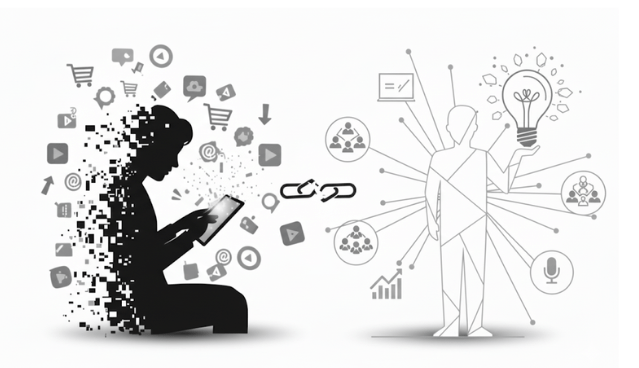
In my work with teachers, I’ve seen firsthand a significant challenge that has only accelerated in our tech-saturated world: the gap between how pre-service teachers use technology and their capacity to teach with it. This is the Consumer-to-Pedagogue Gap, and it is one of the most critical hurdles we must overcome in modern teacher preparation and on-going professional development and coaching as they progress forward in their careers.
This post outlines a framework to bridge this gap, moving teacher candidates from passive digital consumers to active, tech-enabled pedagogues. The central thesis is straightforward: we must replace passive observation with a system of structured, low-stakes rehearsal. This over time will improve instruction as well as the use of technology when integrated together.
This system is not built on intuition; it is grounded in established learning science, specifically the Technological Pedagogical Content Knowledge (TPACK) framework and Cognitive Load Theory (CLT). These are the foundational lenses I advocate for in all effective instructional design.
AI Agent Advancements: Google Lens (aka Homework Helper) and Comet Browser

As educators, we’ve navigated the shift from chalkboards to smartboards, from calculators to laptops. But the change barreling towards us now is different. It’s not just a new tool; it’s a new kind of actor in the learning process. I’m talking about AI-powered tools like Google Lens and the emerging class of AI-agent browsers, such as Perplexity’s Comet Browser. These technologies are fundamentally reshaping what it means to “do work” and forcing us to confront a critical reality: we can no longer guarantee the authenticity of any work done outside our direct supervision. As a result, what does this mean for asynchronous online learning and completing graded work outside of traditional in-person classes?
Using AI to Support Interleaving & Spaced Practice and Retrieval in Unit Planning
As teachers, we are constantly seeking ways to make learning more durable and meaningful for our students. We want them to not just memorize facts for a test, but to fully understand and retain what they’ve learned over the long haul. Cognitive science offers a powerful toolkit of strategies to achieve this, and with theContinueContinue reading “Using AI to Support Interleaving & Spaced Practice and Retrieval in Unit Planning”
EdTech Leadership in the Age of AI: What Matters Most When Everything is Changing

My coffee is still warm when the first alert comes in. A teacher cannot access Canvas, and their students are stuck at the login screen. I walk the teacher through the SSO steps, confirm access, and move on. By midmorning, I have visited classrooms, supported teachers with technology integration, and observed lessons to plan follow-up coaching. After that, I sit with our engineers to review system performance, troubleshoot issues, and test several EdTech tools and updates planned for release.
At two o’clock, there are three messages on LinkedIn about a new AI tool that promises to transform learning. I scan one, note the potential and the hype, and return to the work I already committed to do. The afternoon goes to email, planning professional learning, and reviewing the week ahead.
Sound familiar?
For many of us in EdTech and instructional leadership, this mix of strategic and immediate work is the norm. Some hours go to multi-year plans, budgets, and compliance. Others are dedicated to making sure one specific app works for one teacher so students can keep learning. The pace makes it easy to lose focus when the day is packed and many things are going on simultaneously. I return to a single question: how do people learn, and how can instruction and technology work together to support that? If we cannot answer that question, systems, budgets, and tools will have little impact.
This post shares how I connect what we know about learning with the daily realities of leading technology and instructional change in schools. I will describe several major themes and then provide a summary of the next steps to help you further reflect upon your leadership and programs.
Creating AI Agent Safeguards (for now) through Pragmatic Instructional Design to Deliver Assignments and Assessments

As you prepare your syllabus for the upcoming semester, a question I’ve explored before looms large. In a previous post, “The Death of the LMS in Higher Ed,” I argued that its role as a simple repository for assignments is becoming obsolete. With AI agents now ubiquitous, how do we prevent the LMS from becoming a mere drop-box for bot-generated work from an autonomous AI Agent?
The solution isn’t to fully abandon the LMS (for now), but to evolve its purpose and create humanizing instructional barriers in the tasks and assessments we deliver to our students. This post presents a few practical strategies (I am implementing this term in my own graduate-level course) to revitalize our courses by shifting the focus from the final product, which AI can generate in seconds, to the learning process, which it cannot. This is going to my attempt to defend against students utilizing AI Agents. While I know this may not be one-hundred percent effective, I do have a hunch it will mitigate AI Agents to a degree, at least for the time being, this semester.
Using AI to Build Powerful Retrieval Practice Activities to Supercharge Student Learning Opportunities

The “testing effect,” a term championed by researchers like Roediger and Karpicke, demonstrates that every time a student actively recalls information, they strengthen the neural pathways associated with it. This effortful retrieval tells the brain that the information is important and makes it easier to access in the future. Ultimately, over time, if students are able to actively recall correctly, this means they likelihood of them learning the content, is much higher. Although the challenge for teachers has always been the time it takes to create a rich variety of material, such as flashcards, practice tests, and quizzes, that facilitate this process.
With powerful AI tools, we can now create engaging, interactive retrieval practice activities in minutes. Tools like Gemini, Claude, and ChatGPT have built-in “Canvas” features that can generate the code for these resources, and you don’t need to be a coding expert to use them.
5 Ways Agentic AI Can Transform Your Teaching Workflow

What if you had a personalized assistant who knew your school’s handbook, understood your instructional philosophy, and could help you design lessons tailored to your students’ needs? This isn’t a glimpse into a far-off future; it’s the reality of what AI agents can offer teachers today.
Boost Student Learning with Interactive Worked Examples: Thanks to the Canvas Feature in Gemini, ChatGPT, and Claude

Picture this: you can provide interactive, step-by-step worked examples for just about anything – math problems, ELA sentence structures, science processes, you name it. And here’s the best part: you absolutely do not need to be a coding expert to pull this off.
Aspire to Lead Podcast Appearance: Revolutionizing Collaboration in Schools Through Inclusion

About a month ago, I had the pleasure of joining the Aspire to Lead podcast to discuss co-teaching and instructional coaching. Episode Description: In this episode of Aspire to Lead, Dr. Matthew Rhoads, author of Co-Teaching Evolved and Crush It from the Start: 25 Tips for Instructional Coaches and Leaders, joins me to explore how artificial intelligence is reshapingContinueContinue reading “Aspire to Lead Podcast Appearance: Revolutionizing Collaboration in Schools Through Inclusion”
AI Agents: The Future of School Leadership

The deployment of AI Agents has the potential to greatly impact school leadership. These autonomous software systems, capable of perceiving their environment, making decisions, and executing actions independently, will have the opportunity to redefine the role of educational leaders if they choose to deploy these tools. Remember, we are still in the early days ofContinueContinue reading “AI Agents: The Future of School Leadership”
New Release! Crush it from the Start: 25 Tips for Instructional Coaches and Leaders

Today marks the release of my new book—a resource designed for instructional coaches, principals, assistant principals, college of education professors, and district office leaders who are committed to transforming teaching and learning in the modern classroom. This book isn’t just about coaching strategies; it’s about understanding the content necessary to navigate education in the ageContinueContinue reading “New Release! Crush it from the Start: 25 Tips for Instructional Coaches and Leaders”
The Death of the LMS in Higher Ed: How AI Agents May Make the Traditional LMS Learning Obsolete in the Near Future

The rise of AI-powered agents like Operator (and many more) will drastically reshape how higher education delivers courses online, making traditional Learning Management Systems (LMS) increasingly irrelevant if safeguards are not created. As students gain access to AI tools capable of completing assignments within an internet browser autonomously, writing essays, answering quizzes and tests, andContinueContinue reading “The Death of the LMS in Higher Ed: How AI Agents May Make the Traditional LMS Learning Obsolete in the Near Future”
The Rise of In-House AI Built Learning Applications: Are School Districts Going to Begin Moving Away from SaaS EdTech Tools?

For years, school districts have relied on software-as-a-service (SaaS) solutions for everything from learning management systems (LMS) to assessment tools, student information systems, communication platforms, and assessment tools. However, the rapid evolution of artificial intelligence (AI)—especially with newer, more powerful models—may signal a shift in how schools approach utilizing EdTech and leveraging teacher expertise and funds to create their own in-house apps to meet their needs.
 Navigating the Present and Future of Education