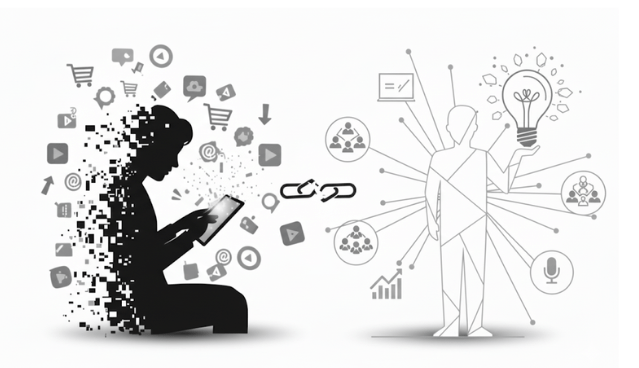
In my work with teachers, I’ve seen firsthand a significant challenge that has only accelerated in our tech-saturated world: the gap between how pre-service teachers use technology and their capacity to teach with it. This is the Consumer-to-Pedagogue Gap, and it is one of the most critical hurdles we must overcome in modern teacher preparation and on-going professional development and coaching as they progress forward in their careers.
This post outlines a framework to bridge this gap, moving teacher candidates from passive digital consumers to active, tech-enabled pedagogues. The central thesis is straightforward: we must replace passive observation with a system of structured, low-stakes rehearsal. This over time will improve instruction as well as the use of technology when integrated together.
This system is not built on intuition; it is grounded in established learning science, specifically the Technological Pedagogical Content Knowledge (TPACK) framework and Cognitive Load Theory (CLT). These are the foundational lenses I advocate for in all effective instructional design.


 Navigating the Present and Future of Education